“Care to expound, or are you just going to leave us all with the impression that you’re merely an inarticulate asshole?”
"Lest I leave the wrong impression, I'm not inarticulate."
— Jay Maynard vs. Walker MagnumI got nothin’

Note: the lack of blogging has nothing whatsoever to do with Fallout 4. Nope, not at all. I can quit any time, as soon as I finish upgrading my power armor and fighting off waves of Super Mutants.
Scary moment: returning to my home town to find that one of my settlers was wandering around with a nuclear grenade launcher; I calmly explained the concept of “friendly fire” and confiscated both of his launchers and all his spare mini nukes. Kids today, I don’t know where they pick up these things.
A _____ of Hestias?
What’s the proper collective noun for a gathering of Hestia cosplayers?
[Update: and what about Rory Mercury?]
Anna Konno, Nymph of Eros

I’ve seen this picture before, and now I know Anna Konno’s secret identity. See?
(NSFW after the jump)
Dear Bethesda,
I’d like to express my astonishment that my 3.5-year-old gaming laptop seems to play Fallout 4 just fine, despite a graphics card that’s roughly 80% as fast as the minimum requirement (GTX 560M vs. GTX 550Ti). Not at anything approaching maximum settings, of course, but it still looks great at 1080p. I kind of wonder how my character will look on a modern machine, though, since many of the adjustments in the designer didn’t seem to do much.
Admittedly, it’s been upgraded with 16GB of RAM and dual SSDs, but still, usually I’d expect to have to reduce the resolution and turn every setting to near-minimum. The game decided that “medium” settings were appropriate, and it’s working out so far.
[Update: after (mumble) hours of play, the primary performance problem is selection lag in the VATS combat display. If this screen were a little less dynamic, I’d be able to select targets before they move into cover or melee range. As it is, I’ve had to turn the difficulty down to compensate.]
By the way, not to sound like an SJW whiner, but when my character is in full power armor, how is it that random raiders know which gender-based slurs to use? Is it the dainty way she swings her minigun?
#1 complaint so far (with only a few minor crashes, one instance of getting stuck between a counter and a table, and having to use the console to get an NPC down off the roof) is trying to find all the bodies after a fight in order to loot them.
#2 would be that having the compass and enemy-finder at the bottom of the screen causes a bit of neck strain. It would be much easier to use if it were at the top.
#3 would be the dog, constantly interrupting my looting by wandering in front of me and intercepting keystrokes as commands, falling from high places, and running in front of automatic weapons. Honestly, this pup makes Lydia look positively graceful. I think I’ve used about twice as many stimpacks on the dog as on myself.
PS: the PipBoy App for iOS doesn’t seem to work at all. I don’t think it’s actually sending packets, since tcpdump sees nothing at all coming from its IP address, and it’s allegedly broadcasting to find machines running the game. Wouldn’t it be nice if I could manually enter the IP address, as your help page falsely claims I can?
Superstitions...
Whatever they say about black cats crossing your path on Friday the 13th, I can assure you that black catgirls are good luck. Well, catgirls of any shade, really. NSFW after the jump.

Note: Google keeps autocorrecting “catgirl” to “cat girl”, which shows a disturbing lack of awareness of what people really want to search for.
Dear Hello!Project Costume Designers,
You fired the person who did this, didn’t you? It’s missing almost every element of your house style.
Naked Venus
Whenever a “wacky Japan” story appears, people will pop up who swear that it’s not really like that over there, and that you could live there for months without seeing anything weird, creepy, fetishistic, or batshit insane.
Old-school potpourri
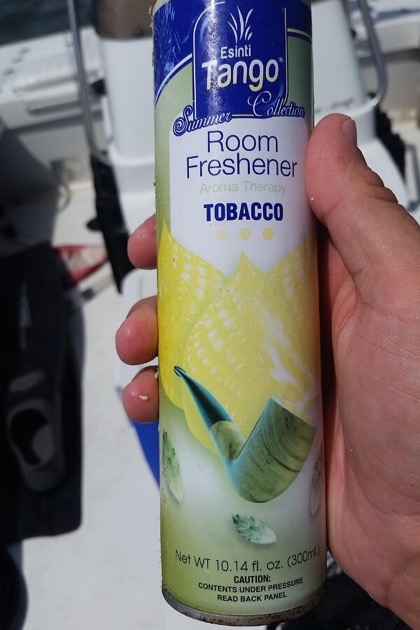
It doesn’t say whether it’s an English or an Aromatic, but I’ve often thought that a good pipe tobacco would make a better potpourri than the usual overpowering seasonal mixes. People seem to like the room note of Captain Black; wonder if I could get away with a little dish of it in the living room when the family comes out for Christmas.
Or maybe I should sprinkle some on my kō incense burner.