“Make no mistake, there will be a trial and when that trial ends, senators will have to decide if they believe Donald John Trump incited the erection against the United States.”
— Chuck Schumer can't get it up; no, reallyAmazon lightning deal to watch for...
Every once in a while, this Sanag 10000mAh battery pack goes on sale on Amazon. I bought one before I went to Japan in April, and it worked great; smaller and lighter than my big Anker charger, faster and more powerful than my old Mophie (which, by the way, loses its charge annoyingly quickly, where the other two can sit on a shelf for at least a month and still be at 100%).
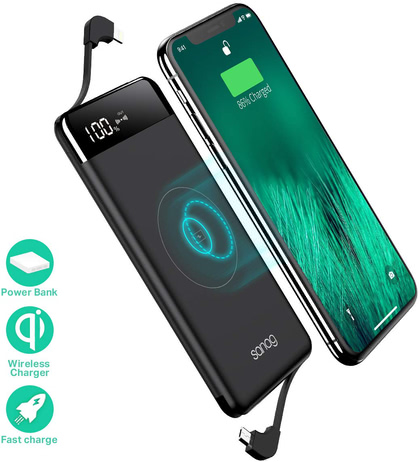
Wednesday evening, I was checking out a recent order, and found a lightning deal had just started, discounting the standard $26.99 price by $4.39, and then adding a 5% off coupon to bring the total, with free tax and shipping, down to $21.25.
So now I have two of them. Did I mention we’re planning to go back to Japan in November? 😁
(and, yes, it’s breaking my rule against buying things from randomly-named Chinese vendors, but this one has actually been around for a while now, and their reviews are actually about this item, not like the scammers who build up positive reviews on something innocuous and then swap it out so that the same listing now refers to a completely different product; “900 four-star reviews say this underwear fits perfectly, which is kind of odd for a bookcase”)

Azumi Kawashima
Last year, I struggled to find the name of one of the cute, wholesome girls in one of my cheesecake posts. It turned out to be the cute, wholesome cover of a porn flick featuring AV actress Azumi Kawashima(川島和津実), whose popularity lasted a lot longer than her brief career.

And, hey, she’s not even 40 yet!
Sounan desu ka?
In an idle moment, I checked out the glass-half-empty that is the current anime season on Crunchyroll, and found a series where the weak pun in the title is being mistranslated as Are You Lost? (more sensibly, “Are We Shipwrecked?”).
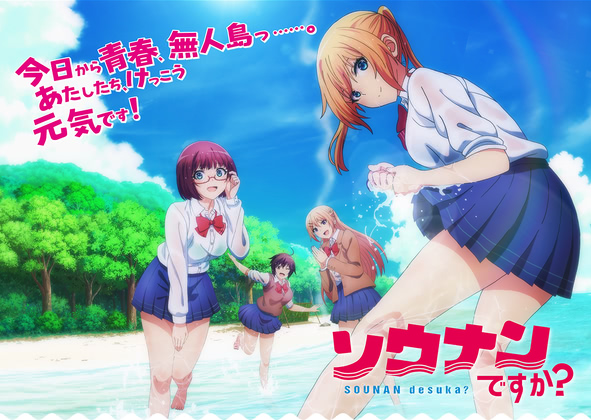
The first 15-minute episode sets up the scenario quite simply: four busty high school girls are washed up on a deserted island after their student cruise goes wrong, and must survive with their convenient array of tropes. I watched it only a few hours ago, and already I can’t remember anything but their defining clichés and their bustlines.
I think the second season of DanMachi starts in two weeks; maybe that will suck less than the Sword Oratorio side series (aka “Is It Wrong To Make A Deranged Lesbian Fangirl The Protagonist In A Spinoff?”).
Practical Thanko product: floormat alarm clock
An alarm clock that won’t stop until you put your weight on it for a few seconds:

This wouldn’t have worked for me in college. I had an incredibly loud, obnoxious alarm clock that had no snooze button, which I kept on the first floor, with the switch wrapped in duct tape. When it went off, hitting “snooze” meant I had to get up, walk downstairs, unwrap it, manually adjust the alarm time, rewrap it, walk back upstairs, and go back to bed.
I generally managed to do this four or five times before actually starting the day.
How Open Source 'Works'...
Seems there’s a trivial denial of service attack against GPG via the keyservers, and the fix is… well, there really isn’t one:
“…the SKS software was written in an obscure language by a PhD student for his thesis. And because of that, according to Hansen, ‘there is literally no one in the keyserver community who feels qualified to do a serious overhaul on the codebase.’”
If you like Piña Co Lada...
…there was a spinoff manga featuring her adventures before the gate opened.
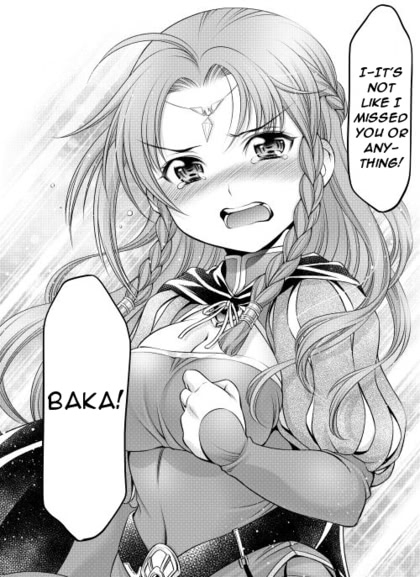
…at a generously-drawn age 14.
File under peculiar the fact that while Amazon is swimming in a sea of rapidly-translated dumpster-fire light novels, Gate is nowhere to be found. If you want to read it in English, there’s a mostly-complete fan translation of the first novel series, but not the eight-volume side stories or the new “season 2” series, because the only group that’s interested can’t find a Chinese translation to work from.
Someone briefly licensed the manga, but abandoned it after releasing the first volume.