“If your workplace is safe; if your children go to school rather than being forced into labor; if you are paid a living wage, including overtime; if you enjoy a 40-hour week and you are allowed to join a union to protect your rights— you can thank liberals. If your food is not poisoned and your water is drinkable— you can thank liberals.”
— What color is the sky on your planet?, Joe Conason editionFuture Waifu Club Endroll!
Endro! has produced relatively little fan-art so far. Perhaps it’s simply flying under the radar; I don’t recall any mention of it before Don’s. Cute and fluffy, without adaptation baggage, and entertaining enough that I watched the latest one as soon as it came out on Crunchyroll.
So far Mei seems like the least-unlikely waifu candidate: she’s a magic-card-collecting otaku with stockings, garters, and a skirt slit up to there with bonus pantsu window, and she cooks. Fai has huge tracts of land, but a disturbing tendency to vigorously gnaw on things when she’s hungry, which is always. Seira is a cute, responsible bookworm, but suffers from A-cup angst, poor housekeeping skills, is ashamed she needs glasses, and is mildly delusional. Yusha is improbably lucky and severely delusional. Mao-chan is, of course, a loli with destiny issues, while Princess Rona is fixated on her heroine ifyouknowwhatimeanandithinkyoudo. Unnamed Teacher is the only adult female so far, and dresses for sexcess, but she’s a bit of a lolicon.

Dear Amazon,
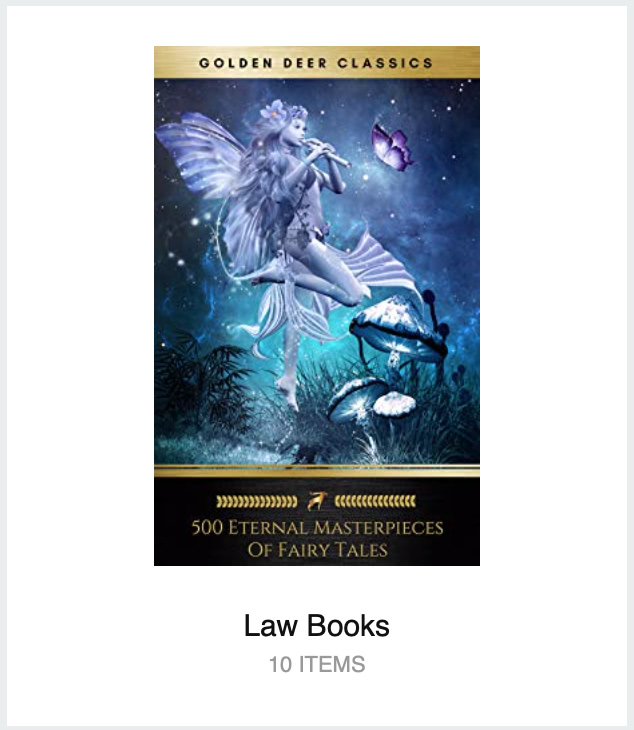
Are you sure this is for toddlers?

These two recommendations really go together…

Progressive Calenders
No, not that kind of “progressive”, the Wondermarkian sort, also called a continuous calendar. Every time he creates one of these in Illustrator and posts it, I save it away with the idea of knocking together a Perl script to generate my own. It only took 4 years for me to get around to it…
Let’s see if I can make a sensible download page for these:
- US Letter paper
- A4 paper
- 11x17 paper
The script needs some cleanup before I inflict it on the world (most
likely as a web form). Also better font-handling; not only is there a
hilarious bug in the header auto-sizing, but there are baseline issues
with many (mostly CJK) fonts that make it tricky to position the
numbers. I also need to make the locale-handling friendlier; the Perl
DateTime module automagically pulls in month and day-of-week names
for any language supported by locale(1), but specifying them as
ja_JP, ko_KR, ru_RU, etc is “less than user-friendly”, and you have
to switch to an appropriate font.
Sadly, the obvious free choice for a font that supports pretty much
any language would be Noto, but
its CJK fonts don’t
work with
PDF::API2.
One feature that’s still in progress is custom colors and text for specific dates. The idea is to feed it a custom list of holidays, birthdays, etc. Since I’m still working on text placement, right now it just sets foreground and background colors, which was enough for marking up a one-page, one-month vacation calendar for our upcoming Japan trip: red for flights, orange for shinkansen trips, blue for flea market days, and yellow background for “oh, crap, it’s Golden Week”.
Update
…and I’ve fixed the silly font sizing/positioning bugs and re-uploaded. Part of my problem was that I was fighting some silly fonts, and the epicycles required to position them vertically were screwing with the non-silly fonts. I still have a fudge factor in the script, but now it’s based on identifying the silliness (capheight or ascender >= bbox ymax).
Just noticed…
Trello’s calendar add-on works this way, but with just a subtle shading change as you move between months (along with the gray-on-gray text thing, which never fails to annoy me).
Dear Amazon,
If you have multiple versions of a song, and I say, “Alexa, play $song”, please select the version that I actually purchased from you. Don’t make me say, “Alexa, play $song from my music”, especially when the title is long, like, say, “Keep your eye on the sparrow”.
Also, don’t play the newest cover version of a song, by some random nobody. Ever. Don’t make me spend ten minutes trying to find the right incantation to get you to cough up the real one. If you’re not sure, ask.
And when you can’t find the song at all and start playing something “popular” based on one of the words in the title I gave you, please ask me what you did wrong when I shout, “Alexa, stop!”.
[Sadly, Amazon Music doesn’t have the actual soundtrack for Dark Star, so all the available versions of Benson, Arizona are by some guy who gives it a good shot, but it just doesn’t work.]
Dear systemd,
ProtectHome considered harmful.
Seriously, WTF? I looked at four recently-kickstarted CentOS 7.x servers and said, “hey, /home ended up on the small partition, so I’ll move it to a bigger one”. I could not do this.
Removing this bullshit from two daemon configurations (NetworkManager? chronyd?) and rebooting managed to fix it on two of them, but not on the other two, and they were all kickstarted with the same config (not a great config, but it wasn’t done by me, and blowing them away and starting over would undo recent work by external con$ultant$).
Dear FedEx,
I have cameras watching the front door. Don’t lie to me.
2/28 Update
Package actually delivered today.
Except what Woot sent me wasn’t what I ordered.
Sigh.
Yes, please
Second-best thing happening in April this year…
Dear Amazon,
One thing I can always count on for amusement is product classification…