Battle maidens, assemble!
So, the artist who was bullied on Bluesky until she deleted her Malfoid fan-art received so much support that she reposted it on Instagram and X, and then deleted her Bluesky account. The bullies learned nothing from this, and are impotently spitting blood. The artist is happily making more Malfoid art for her old and new fans.

Last new show for me will be Isekai Solo Worshipper on the 11th, where a boy who didn’t get a cool cheat skill when his class got isekai’d ends up gaining a close personal relationship with a lonely goddess. And optimizes his meager powers into major cheats, of course. And gets the girls, of course.
Flatcat & Sword-Daddy 2, episode 2
Our Adorable Engine Of Destruction cuts loose, while Our Goofy Necrodaddy is reunited with His Undead Gay Shota Trojan Horse. Who’s also now tied to the dark secret of the sky island dungeon, which of course means flashbacks.
Verdict: plenty of comedy and pretty well-animated fighting.

Rerun’s Special Magic 2
Not too confident about this one. The good news is that they jump right in, not just picking up where they left off, but skipping over a few months in order to show Our Heroes kicking some ass and advancing their position among the good guys. I’m sure it means there will be some backfill exposition later, but it spares us a tedious premiere. However, the tone gets whiplashed by Our Little Gay Bunnyboy’s role as comic relief, which is an awkward fit in every one of his scenes. It’s like he’s from a different show entirely.
Other good news is that Our Ice Princess got more character development in this episode than she had all last season. Other bad news is that we now have a Divine Voiceover announcing quest status as Our Smug Hero begins changing what to him is ancient history. Oh, and Our Redhaired Tsuntail starts off very shouty.
Verdict: a very mixed bag.

(unrelated Best Girl is sorely missed)
Strata coding hell
So, this is supposed to enable you to run a large, high-quality coding model on consumer hardware. I asked it to write a simple OpenSCAD program to create a double-sided doorstop along the lines of the Jamm:
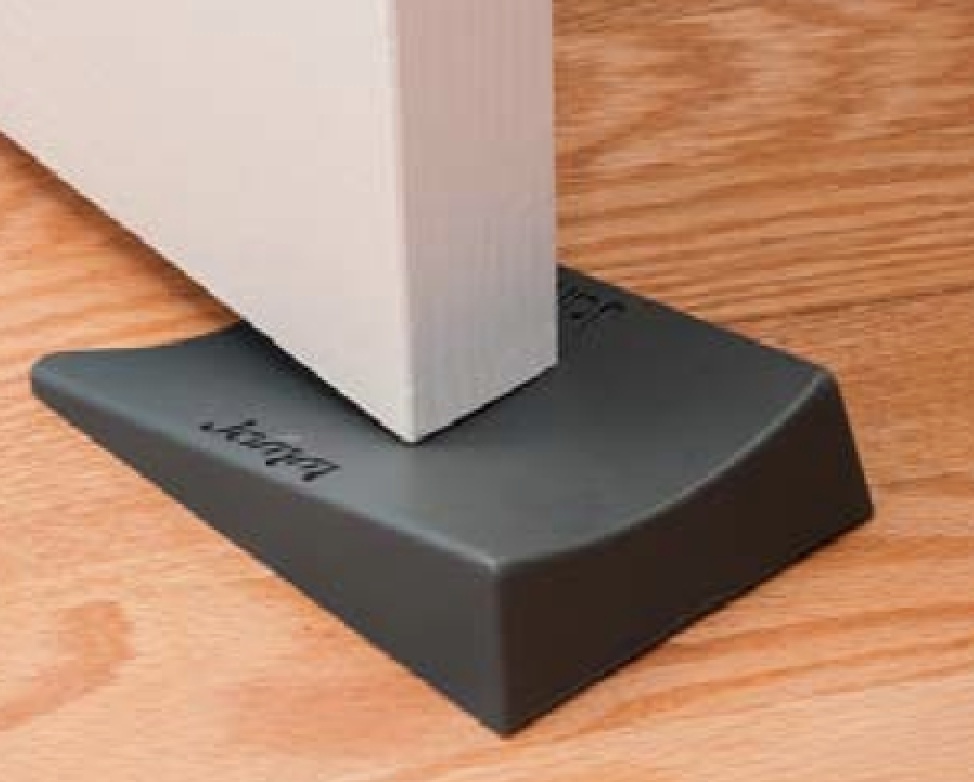
First pass, based on an admittedly loose specification, created working code that technically met the requirements, but was butt-ugly. I asked for something more printable, with a smooth curve. I got syntax errors. Eleven passes later, it had (briefly) stopped trying to write complex buggy procedural code and agreed to try differencing geometrical primitives (which should always be your first choice with OpenSCAD).
To make a very long story short (the complete transcript, with “low-effort” “reasoning”, ran to 446 pages of line-printed text), it took five hours to get it right, and it was changing every line of code the entire way. Even when I told it that it was 99% there and only needed to extend a polyhedron one unit in order to cleanly subtract it from the base object, it wrote something completely new that hallucinated functionality that doesn’t exist in OpenSCAD. My final instruction was “how did you manage to change almost-perfect code into something completely different that floods the screen with errors?”
Why did I keep trying this for five solid hours? Because each pass took from 3-15 minutes, and I was working on file servers in other windows, so I could just hit a button every once in a while and let it “think”.
How long would it have taken me to do it from scratch? A couple of years ago, when I was writing OpenSCAD every day, maybe an hour, most of which would be spent tweaking the geometry and rounding all the edges. Today? Pretty sure I’d have managed to kit-bash it together out of old code in less than two hours, with results that I understood how to modify and could reuse in making other things.
As usual, my favorite part is how the LLM keeps telling me that this time, it’s written “tested, verified code”. 😁

(my initial tests were admittedly with the smallest version of the model that Strata supports, which is the only one that would run on my old gaming machine that has only 32 GB of RAM and a 16 GB 5060 Ti; despite its coding fails (you need very careful prompting and context management to keep GenAI coding focused), it’s running at ~65 tokens/second, which is pretty useful. Installing it on my current gaming machine with 64 GB of RAM and a 24 GB 4090, it runs a much bigger version of the model at a bit over twice that speed)
Speaking of local GenAI…
Microsoft has announced a whole range of licensed products built around Nvidia’s RTX Spark AI platform, mostly developer laptops, with their special pre-configured just-for-devs version of Windows 11. In addition to an “ultra” version of the Windows Surface laptop, there’s the Dev Box, a $6,000 unit that promises two USB-C ports, a USB-A port, HDMI, a headphone jack, and “ethernet”.
No one has found a single source detailing the speed of this “ethernet” port, despite the specs page clearly showing that the USB-C ports are 10Gbit. One might expect a $6,000 device that downloads gigantic AI models and is designed to process vast quantities of data might, y’know, be connected. Evidently that information is too valuable to share on announcement day.
Not too important to share is the news that “Oh My Posh” is preinstalled. I had to look that one up; it’s a fancy-pants skittletext CLI prompt utility. Blech.

(no sign of it on the company store yet; you’d hope that they’d want to get these into the hands of their employees and alumni…)
Comments via Isso
Markdown formatting and simple HTML accepted.
Sometimes you have to double-click to enter text in the form (interaction between Isso and Bootstrap?). Tab is more reliable.