Action gals in action
Magilumiere 2, episode 4
I could do with fewer flashbacks, but Our Magical Gals got the job done, and did a little light bonding with Our Cuddly Magical Engineer and Our Emotionless Magical Hottie.
Verdict: better than last week.

Isekai Ass-Guardian, episode 4
…and now you know why Theresia is Best Lizard Gal. And we get to see Our Platonic-As-Far-As-He-Knows Harem take their first step into a larger world.
Verdict: still a bit of a speedrun (especially the handwave on acquiring enough mercenary tickets to buy out Theresia’s contract), but it didn’t feel as rushed as last week, giving the core party time to talk about goals and ambitions, making Theresia a full member, introducing another future member, setting up multiple story lines, and expanding on The Rearguard Effect.

Skeleton Knight 2, episode 4
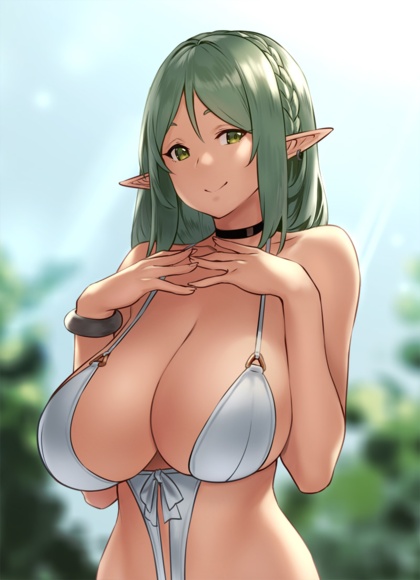
The secret is water. Our Titty Elf and Her Equally Endowed Big Sister go through a sword fight without so much as the tiniest jiggle, but a magical water bubble produces proper Gainaxing. Ordinary bathing is not sufficient, as the sisters demonstrate later.
As for the plot, it starts out as another side quest, although we do get a tiny bit of motion on the princess-killing conspiracy from the previous season, enough to at least reintroduce the players and their motives. It ends up tying into the hints they’ve been dropping, and next week may advance the central plot.
Verdict: better pacing than some other shows this season, but they’re really skimping on the animation part of the animation, and not just failing to jiggle.
A little of the ol’ ultraviolet
I bought a small-but-featureful EDC flashlight recently, which has a spring clip, lanyard hole, and strong magnet for mounting options, a decently bright main LED, a perfectly reasonable red LED to protect your night vision, and an ultraviolet LED to convince you that you really need to scrub the bathroom. It’s from Olight, who also makes nice weapon-mount lights and offhand carry flashlights, and I like it. I have no use for the half-dozen rave blinking options (the red LED is actually R/G/B, and most of the modes blink the colors in sequence, which has no practical use), but it’s unobtrusive and hands-free for things like taking out the garbage at 2 AM, and bright enough to make it easier to search a room for something that’s gone missing.
The biggest drawback is one that it shares with almost all modern flashlights: features are accessed with a combination of press, press-and-hold, double-click, and triple-click, some of which do different things when the light is off versus on. And of course the power status is a single small light that has three states that are indistinguishable by anyone with even slightly color-deficient vision.
Could be worse, I suppose; it could have an app with mandatory cloud and AI integration. And a monthly subscription model to enable features.
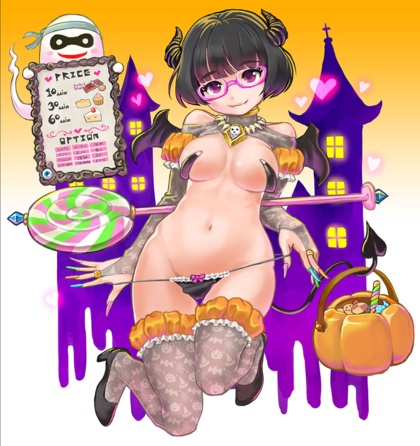
(trick-and-treat little devil is unrelated but I like her prices)
Migrated
The Ubuntu Experience is still pretty shitty. Install upgrades? No more video card for you! Basically, every kernel patch comes with a Chinese Fire Drill to get the Nvidia drivers working again, without which the machine appears functional, but has terrible graphics and GenAI performance. How to fix it? Try this, then that, then the other thing, and if none of those work, upgrade to a newer release of Ubuntu! And that won’t work, either!
So, running the (final!) round of 25.x patches broke Nvidia support, and upgrading to 26.x and reinstalling the Nvidia drivers from scratch didn’t fix it, so I could not use this machine for running LLMs. LM Studio still ran, but in CPU-only mode, which is a good 50x slower, even on tiny models.
I could find no useful documentation for how to resolve this
problem. I ended up manually removing every package that mentioned
“nvidia” or “cuda” in the name, removed all leftover config files
with those strings, deleted the nvidia repo config, rebooted, ran apt update and ubuntu-drivers install, and rebooted again. Now I have a
graphics card, ho, ho, ho. (there used to be a GUI app to install
drivers in 25.x; this is apparently gone in 26.x)
Clearly this is finally The Year Of Desktop Linux!
(what made this particularly annoying was that my workflow for publishing releases for my C1GA project involves using a lightweight LLM to convert JSON-format image prompts to natural-language paragraphs, 5,000 at a time; this is a lot more practical at 1.3 seconds/prompt than at 65+ s/p)
Migranted
I stopped at Costco on the way to visiting my mom at the (temporary) senior-living center. Thursday afternoon at 4 PM, and the store was full of people with strong African accents who gave the impression of being uninterested in assimilation to Western cultural norms (this is a polite euphemism). Expected population distribution? 85% white American, 5% black American, 10% second-generation Korean-American.
I had to stay with her fairly late, so on my way home I stopped at the new sports bar down the block from my house for some takeout (which replaced the local-boy-does-good sports bar that quickly bankrupted the guy who poured his savings into renovating a former Buffalo Wild Wings).
I thought it a bit odd that I was the only customer at 9 PM on a Thursday in a place that’s open until 2:30 AM, and they didn’t even have any Doordash pickups, but they are new, so maybe they just haven’t built up a crowd of regulars. The location is convenient, but the previous owner did go broke, and Covid had killed off the Buffalo Wild Wings. So, y’know, not out of the question.
The food was good and the staff was friendly, so I’ll certainly order food from them again (but only takeout; I hate sitting in sports bars), but what struck me was that everyone working there was a foreigner on a visa, each from a different country. I could hear chatter from the kitchen about friends having difficulty getting back into the US or having recently been deported.
My city’s demographics? 87% white, 4% black, 2% hispanic, 1% asian, 2% misc, 4% mixed. Those were the numbers before the migrants showed up, anyway.
Comments via Isso
Markdown formatting and simple HTML accepted.
Sometimes you have to double-click to enter text in the form (interaction between Isso and Bootstrap?). Tab is more reliable.