Not my holiday
My co-workers had the day off. Kind of means that I get the day off, except not.
Farm Harem Maybe 2, episode 5
Random scenes were random. Vampire medical research, nut trees, slime parachutes, and tan elves in both adorable chibi and lovestruck adult form.
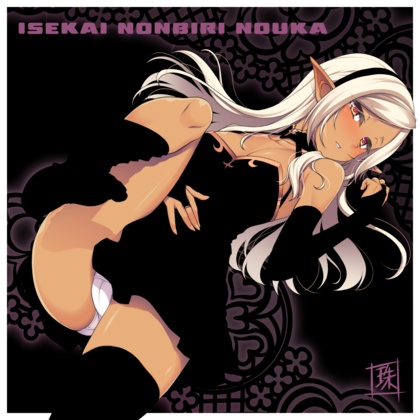
Verdict: if this were the source material, Our Eager Tan-Elf Maiden would no longer be a maiden, but at least somebody openly wants the D.
FYI, this is pretty much the only tan-elf fan-art from the show:
Witch Hat Atelier, episode 6
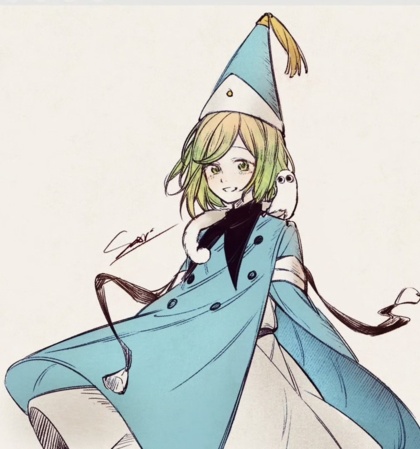
This week, a wild man-witch appears! And quickly falls victim to the power of cuteness, against which no scruffy grumpy father figure can stand. Also, Our Main Father Figure demonstrates that he’s actually quite a good teacher. Also a good cook, the subject of the spinoff manga.
Verdict: the animators got to focus on charm instead of spectacle this week. Actually, they got the week off to recover from last week. That’s right, the B team is better than other shows’ A teams.
Omarchy Linux: oh, fuck no
Omarchy pitches itself as a “beautiful, modern, and opinionated Linux”. After playing with it for a few days, I’d change that to “quirky, fragile, and retarded”.
Since I resurrected my old gaming PC on Ubuntu to run LLMs, I’ve been poking at the various recommended distros and installing them on an old Intel Macbook that I needed to wipe. It used to be my sterile international-travel laptop, but the last working version of MacOS made it run so slowly that I gave up and migrated that role to my other, not-quite-so-ancient Intel Macbook Air.
The old one predates Apple’s T1/T2 security chips, so it’s easier to install an alternative OS and get full hardware functionality. And indeed, everything worked just fine the second time I installed it.
Because the first install was unable to retrieve updated packages. Apparently, when it tells you that the installation is done and you should click the button to restart, it is not in fact done, and expects you to leave the installer USB stick inserted until the reboot finishes. Surprise!
The second install was fine, but not only did all of the supplied themes have low-contrast small text (and were mostly “dark”, blech), there was almost no ability to customize anything about the graphical UI. Pointer sensitivity and acceleration? No. UI font size? No. Custom font install? No. Pretty much everything you’d expect to find on a “control panel” of some sort simply wasn’t there. If the creators were aware of the concept of “accessibility”, I found no supporting evidence.
There is some customizability, but it involves just dumping you into a text editor with a config file that doesn’t have any useful documentation.
Two tiny little things led me to scrub the disk and try another distro:
-
There is a convenient and easy-to-press menu option to switch the wi-fi into AP mode. There is no button to switch back. I couldn’t undo what I accidentally did when the unchangeable over-sensitive trackpad settings clicked there while I was moving the pointer.
-
I opened the GUI file manager (which bafflingly doesn’t seem to support viewing any files outside of your home directory) and while moving the pointer with the trackpad, accidentally (see above) dragged one folder into another. Unfortunately, I had just made all folders visible (one of the only configuration options available), and since everything about the configuration is stored in
~/.localand~/.config, moving either one of them instantly breaks the entire user interface. I couldn’t open the application menu to get into the terminal, I couldn’t get at the settings, I couldn’t even cleanly shut down the system.
I was already feeling pretty negative about the whole experience, but those two easy fails finished it off. Neither would have happened if the trackpad driver had any configurability, even just a checkbox to turn off tap-to-click, and that sort of “opinionated” design is at the core of the distro. Fail.
Comments via Isso
Markdown formatting and simple HTML accepted.
Sometimes you have to double-click to enter text in the form (interaction between Isso and Bootstrap?). Tab is more reliable.