Computers
Dear Sony,
Why on Earth are you shipping a brand-new, business-class laptop with a 14-inch 1024x768 display?!?!?
Dear Roxio,
Your DigitalMedia SE software is installed on one of our Windows laptops (Sony ships the damn thing, in fact). It’s supposed to help users burn DVDs. When I pushed the little button to burn a disc containing 3+ GB of data scattered across several thousand files, a little dialog box popped up complaining that 6 of the files couldn’t be written.
This was in a fixed-width window, and the files were listed with their full pathnames, cut off at the end of a non-resizable column. I have no idea which 6 files can’t be burned to the DVD, and your software refuses to tell me. Obviously no one at your company has ever actually used your product.
Two days, two dead Sony laptops
Yesterday, a user’s VAIO BX640 dropped dead in the middle of a meeting. It didn’t come back, and by that I mean “nothing happens when you press the power button”. After swapping in different battery and power supply, I called for service.
This afternoon, another user reported that he wasn’t getting sound out of his BX640, and the headphone jack just made ticking noises. It doesn’t even make the magical VAIO noise when you power it on. I swapped parts around, reset the BIOS, etc. No luck. This isn’t a critical issue, so I’ll wait until Monday to ship it off for service, but it’s disturbing, because they’re both motherboard problems. And so was the only other one of my (more than a dozen) BX640s to fail so far, several months ago…
More fun with old laptops
I’m playing with my old Sony XG-19 again. As reported earlier, OpenBSD 4.1 worked but never played DVDs, Fedora 7 blew chunks during the install, and Debian 4.0 worked fine, requiring only a few xorg.conf tweaks and a copy of libdvdcss2.
But it sucked for Japanese, so it had to go. There are all sorts of input managers and applications available, but they don’t all play nice with each other, and the system setup assumes that anyone who wants to type in Japanese wants a completely localized system. You can work around this, eventually, but I lost patience.
So I tried CentOS 5. The graphical install worked fine, the xorg.conf file only needed a one-line change to shut off double-tapping on the trackpad, and once you find DAG, it’s easy to get DVDs playing with VLC (Totem steadfastly refuses to admit which of its plugins are missing, and nothing I install seems to placate it, but who cares?).
The Japanese support in CentOS is much more mature, and offers a user experience reasonably close to Mac OS X or Windows. The default keybindings are naturally different from anything you’ve ever used before, but one has to make some concessions when dealing with Open Source, and it has a “behave like Windows” option.
Now to build the current version of Claws Mail…
[Update: got Claws 2.10 built and running, and unlike my Debian install, it plays nice with the Japanese input method.]
Claws Mail doesn't appear to suck
My friends keep whining about certain behaviors in Apple’s Mail.app. Specifically, the inept way it wraps URLs in allegedly plaintext email, which simply don’t work in most other mailers. I can’t really defend its behavior, because I think that Mail.app’s concept of “plain text” is pure shit and violently anti-WYSIWYG, obviously only tested against itself. [note: don’t bother complaining to Apple, the bug will be closed with “working as intended”]
Claws Mail seems to be much more sensible, and at this point I’d cheerfully send some cash to support a native port to Mac OS X. The X11 port works, but it’s a bit clumsy to use (especially for Japanese; Apple’s X11 server doesn’t support their own Kotoeri input method, so you have to use an external editor), and like virtually all Open Source applications, it’s in desperate need of user interface design. I need to poke around some more and see how it handles some of the features I rely on in Mail.app (particularly SpamSieve), but the initial experience is pretty good, and it sends honest-to-gosh plain text.
There’s a native Windows port available, but it hasn’t been updated in quite a while (2.4, current is 2.10).
[Update: Tip for the day: don’t open an IMAP folder containing 17,167 messages. Claws locks up until it finishes downloading and processing all of their headers, and then (at least on Mac OS X) the X server locks up for a few minutes when you try to scroll through the massive message list too quickly.
Mind you, until today I didn’t know that I had an IMAP folder with 17,167 messages in it (it was a trash folder full of spam, on a server I’d only been reading via POP), so I really can’t blame Claws Mail for being a bit overwhelmed. And to its credit, it recovered perfectly when the X server came back, and the memory footprint was still nice and lean.
It doesn’t look like the Mac port includes any plugins right now, so I need to keep something else around to handle spam. The account I most want to get mail from is of course the one with the most spam, so I need to continue processing it through SpamSieve for now. Most likely, what I’ll do is leave Mail.app running with SpamSieve on one of my machines, but turn off all of the other filtering rules and port those to Claws.]
Perhaps I should have stopped here...
Recently I picked up a new battery on Amazon for my ancient Sony VAIO XG-19. I used to use it to VPN into Microsoft to work from home, but that meant running XP Pro, which is not terribly pleasant with 256MB of RAM. So, I could either use the original restore CDs to put Windows 98 back on, or I could free it from the chains of Microsoft (and complete hardware compatibility, but who needs all those ports and drivers anyway…).
First up was OpenBSD 4.1, which I’m quite fond of for firewalls and hostile-universe-facing servers. I didn’t expect much, and certainly the manual package retrieval and dependency tracking is a pain in the ass when configuring it as a desktop, but it worked, and I only had to tweak one line in the supplied xorg.conf to get it running. VLC wasn’t terribly happy about my limited video memory and pathetic CPU, but I wasn’t really expecting a multimedia powerhouse. There’s only so much you can do with a 650MHz Pentium III.
Fedora 7 blew chunks.
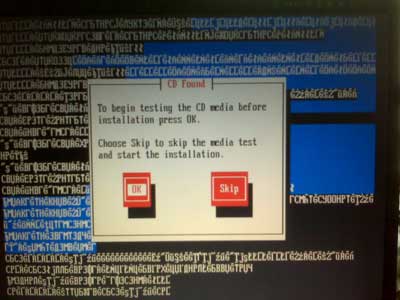
It actually made it all the way through if I forced it to install in text mode, but the same DVD I installed the OS from couldn’t be mounted after the install finished (to add Emacs, of all things, which was inexplicably missing from the selected packages), and the first reboot after the install locked up good and hard after loading the Sony JogDial driver.
I have no desire to ever look at Ubuntu again, so I suppose I’ll give the latest Debian a try before going back to a BSD variant.
[Update: Debian 4.0 installed just fine, and after tracking down the magic to get the synaptics driver to stop accepting taps as double-clicks (blech), setting the right options for the neomagic video driver, and locating the libdvdcss2 package, it’s running fairly well. DVDs actually look pretty good, and the drive is old enough not to require a region-unlocking firmware update. The downside: modern Linux distributions install more crapware than Sony does. Oh, and I still needed to install Emacs myself…]
Gosh, thanks, PC Connection!
I ordered one of these (250GB laptop SATA drive) a few weeks ago, knowing that they weren’t in stock yet. Today, PC Connection says they’re in stock, shipping today, but mine is still marked “back-ordered”, and a call to customer service confirms that it won’t ship until around July 9th.
Why? Because it’s in stock in California, and she said that orders going to California have to ship from a warehouse in another state. So my shiny new drive has to be loaded onto a truck, driven a thousand miles or so, and then overnighted back to California.
And she’s not kidding. If I try to place a new order, it shows as “in stock, shipping today” right up to the moment I try to finish the transaction, at which point it switches to “2+ weeks”.
Feh.
[7/5 Update: we just got bit by this again, when we ordered a shiny new “in-stock” LED-backlit MacBook Pro for a new hire. It arrived two weeks after he did, shipped from Nashville. Meanwhile, I’m still waiting on my new drive…]
[7/10 Update: still hasn’t shipped, and customer service confirms that they still haven’t managed to ship any from their warehouse in California to their warehouse in Nashville. So, I ordered another one from Other World Computing, who’s had it in stock for weeks for $20 more, and who promises to have it on my desk by 10am tomorrow. I might leave the other order open and expense it at work; we’ve got several laptop users who’d love to have 250GB.]
Sony says: "we'd rather sell laptops than force Vista on you"
Well, for corporate customers, at least.
It’s no secret that Vista sales have been sluggish, with many people (and most companies) preferring to stick with Windows XP for now. Retail sales are pretty much Vista-only, though, and online dealers have a strong preference for it as well.
At my company, application compatibility has been the main reason to avoid Vista (as opposed to Office 2007, where “user pain” tops our list). If all their apps and peripherals worked, I think most of our users would quickly adapt to Vista, and prefer it over XP.
Until that day comes, we’re sticking with the XP-based models in Sony’s SZ and BX series, which continue to deliver excellent performance and stability (one motherboard failure in 20+ machines, quickly repaired). I’ve been casually keeping an eye on Sony’s lineup, on the assumption that when the existing supply of XP-based VAIOs runs out, it will be Vista time.
Maybe not. Today’s press release from Sony Japan only has assorted versions of Vista on the A, F, and G series, but still offers XP on the brand-new widescreen BX’s. The BX series is still completely absent from sonystyle.com, but now that the new model has been announced in Japan and Europe, it should show up soon here.
Sadly, all recent models in the lightweight SZ series (beloved by our non-Mac-using executives) are Vista-only, but unless we hire a lot more execs soon, we’re in pretty good shape there.